Friday, February 27, 2015

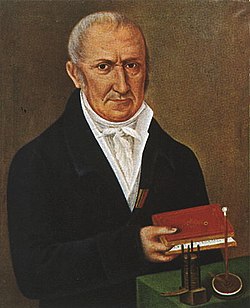
Famous Scientist Alessandro Volta

Volta (Alessandro Giuseppe Antonio Anastasio Volta) was born in Como, a town in present-day northern Italy (near the Swiss border) on 18 February 1745. In 1794, Volta married an aristocratic lady also from Como, Teresa Peregrini, with whom he raised three sons: Zanino, Flaminio, and Luigi. His own father Filippo Volta was of noble lineage. His mother Donna Maddalena came from the family of the Inzaghis.

In 1774, he became a professor of physics at the Royal School in Como. A year later, he improved and popularised the electrophorus, a device that produced static electricity. His promotion of it was so extensive that he is often credited with its invention, even though a machine operating on the same principle was described in 1762 by the Swedish experimenter Johan Wilcke. In 1777, he travelled through Switzerland. There he befriended H. B. de Saussure.

In the years between 1776 and 1778, Volta studied the chemistry of gases. He researched and discovered methane after reading a paper by Benjamin Franklin of United States on "flammable air". In November 1776, he found methane at Lake Maggiore, and by 1778 he managed to isolate methane. He devised experiments such as the ignition of methane by an electric spark in a closed vessel. Volta also studied what we now call electrical capacitance, developing separate means to study both electrical potential (V ) and charge (Q ), and discovering that for a given object, they are proportional. This is called Volta's Law of Capacitance, and it was for this work the unit of electrical potential has been named the volt.

In 1779 he became a professor of experimental physics at the University of Pavia, a chair that he occupied for almost 40 years.

Volta and Galvani

Luigi Galvani, an Italian physicist, discovered something he named "animal electricity" when two different metals were connected in series with a frog's leg and to one another. Volta realised that the frog's leg served as both a conductor of electricity (what we would now call an electrolyte) and as a detector of electricity. He replaced the frog's leg with brine-soaked paper, and detected the flow of electricity by other means familiar to him from his previous studies.

In this way he discovered the electrochemical series, and the law that the electromotive force (emf) of a galvanic cell, consisting of a pair of metal electrodes separated by electrolyte, is the difference between their two electrode potentials (thus, two identical electrodes and a common electrolyte give zero net emf). This may be called Volta's Law of the electrochemical series.

In 1800, as the result of a professional disagreement over the galvanic response advocated by Galvani, Volta invented the voltaic pile, an early electric battery, which produced a steady electric current. Volta had determined that the most effective pair of dissimilar metals to produce electricity was zinc and silver. Initially he experimented with individual cells in series, each cell being a wine goblet filled with brine into which the two dissimilar electrodes were dipped. The voltaic pile replaced the goblets with cardboard soaked in brine.


First battery:

In announcing his discovery of the voltaic pile, Volta paid tribute to the influences of William Nicholson, Tiberius Cavallo, and Abraham Bennet.

The battery made by Volta is credited as the first electrochemical cell. It consists of two electrodes: one made of zinc, the other of copper. The electrolyte is either sulfuric acid mixed with water or a form of saltwater brine. The electrolyte exists in the form 2H+ and SO42−. The zinc, which is higher in the electrochemical series than both copper and hydrogen, reacts with the negatively charged sulfate (SO42−). The positively charged hydrogen ions (protons) capture electrons from the copper, forming bubbles of hydrogen gas, H2. This makes the zinc rod the negative electrode and the copper rod the positive electrode.

Thus, there are two terminals, and an electric current will flow if they are connected. The chemical reactions in this voltaic cell are as follows:

Zinc:
Zn → Zn2+ + 2e−
Sulfuric acid:
2H+ + 2e− → H2
The copper does not react, but rather it functions as an electrode for the electric current.

However, this cell also has some disadvantages. It is unsafe to handle, since sulfuric acid, even if diluted, can be hazardous. Also, the power of the cell diminishes over time because the hydrogen gas is not released. Instead, it accumulates on the surface of the zinc electrode and forms a barrier between the metal and the electrolyte solution.

Last years:

Volta explains the principle of the "electric column" to Napoleon in 1801.
In honour of his work, Volta was made a count by Napoleon Bonaparte in 1810. His image was depicted on the Italian 10,000 lira note along with a sketch of his voltaic pile.

Volta retired in 1819 to his estate in Camnago, a frazione of Como, Italy, now named "Camnago Volta" in his honour. He died there on 5 March 1827, just after his 82nd birthday. Volta's remains were buried in Camnago Volta.

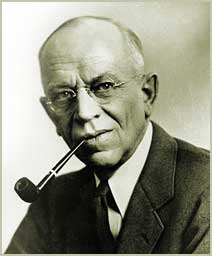
Aldo Leopold

Rand Aldo Leopold was born in Burlington, Iowa, on January 11, 1887. His father, Carl Leopold, was a businessman who made walnut desks; and his mother, born Clara Starker, was Carl's first cousin. Charles Starker, father of Clara and uncle of Carl, was a German immigrant, educated in engineering and architecture. Rand Aldo was named for two of Carl's business partners—C. W. Rand and Aldo Sommers—although the "Rand" was eventually dropped. The Leopold family included younger siblings Mary Luize, Carl Starker, and Frederic. Leopold's first language was German, although he mastered English at an early age.

Aldo Leopold's early life was highlighted by the outdoors. Carl would take his children on excursions into the woods and taught his oldest son woodcraft and hunting. Aldo showed an aptitude for observation, spending hours counting and cataloging birds near his home. Mary would later say of her older brother, "He was very much an outdoorsman, even in his extreme youth. He was always out climbing around the bluffs, or going down to the river, or going across the river into the woods." He attended Prospect Hill Elementary, where he ranked at the top of his class, and then, the overcrowded Burlington High School. Every August, the family vacationed in Michigan at the forested Les Cheneaux Islands in Lake Huron, which the children took to exploring.

In 1900, Gifford Pinchot, who oversaw the newly implemented Division of Forestry in the Department of Agriculture, donated money to Yale University to begin one of the nation's first forestry schools. Hearing of this development, the teenage Leopold decided on forestry as a vocation. His parents agreed to let him attend The Lawrenceville School, a preparatory college in New Jersey in order to improve his chances of admission to Yale. The Burlington High School principal wrote in a reference letter to the headmaster at Lawrenceville that Leopold was "as earnest a boy as we have in school... painstaking in his work.... Moral character above reproach." He arrived at his new school in January 1904, shortly before he turned seventeen. He was considered an attentive student, although he was again drawn to the outdoors. Lawrenceville was suitably rural, and Leopold spent much time mapping the area and studying its wildlife. Leopold studied at the Lawrenceville School for a year, during which time he was accepted to Yale University. Because the Yale School of Forestry granted only graduate degrees, he first enrolled in Sheffield Scientific School's preparatory forestry courses for his undergraduate studies. While Leopold was able to explore the woods and fields of Lawrenceville daily, sometimes to the detriment of his studying, in Yale he had little opportunity to do so; his studies and social life engagements made his outdoor trips few and far between.

Nature writing:

Leopold's nature writing is notable for its simple directness. His portrayals of various natural environments through which he had moved, or had known for many years, displayed impressive intimacy with what exists and happens in nature. He offered frank criticism of the harm he believed was frequently done to natural systems (such as land) out of a sense of a culture or society's sovereign ownership over the land base – eclipsing any sense of a community of life to which humans belong. He felt the security and prosperity resulting from "mechanization" now gives people the time to reflect on the preciousness of nature and to learn more about what happens there.

A Sand County Almanac:

The book was published in 1949, shortly after Leopold's death. One of the well-known quotes from the book which clarifies his land ethic is,

A thing is right when it tends to preserve the integrity, stability, and beauty of the biotic community. It is wrong when it tends otherwise. 

The concept of a trophic cascade is put forth in the chapter, "Thinking Like a Mountain", wherein Leopold realizes that killing a predator wolf carries serious implications for the rest of the ecosystem — a conclusion that found sympathetic appreciation generations later:

Legacy:

An organization, The Leopold Heritage Group, is "dedicated to promoting the global legacy of Aldo Leopold."

The Aldo Leopold Wilderness was named after him in 1980.

The U.S. Forest Service established the Aldo Leopold Wilderness Research Institute at the University of Montana Missoula in 1993. It is "the only Federal research group in the United States dedicated to the development and dissemination of knowledge needed to improve management of wilderness, parks, and similarly protected areas.

The Aldo Leopold Legacy Trail System, a system of 42 state trails in the state of Wisconsin, was created in 2007.

The Aldo Leopold Foundation of Madison, WI was founded in 1982 by Aldo and Estella Leopold's five children as a 501(c)3 not-for-profit conservation organization whose mission is "...to foster the land ethic through the legacy of Aldo Leopold."

A charter school in Silver City, New Mexico was named after Leopold.

He passed away on April 21, 1948.

Sunday, February 22, 2015

Albrecht von Haller


Albrecht von Haller was born on 16 October 1708 in an old Swiss family at Bern. Prevented by long-continued ill-health from taking part in boyish sports, he had more opportunity for the development of his precocious mind. At the age of four, it is said, he used to read and expound the Bible to his father’s servants; before he was ten he had sketched a Chaldee grammar, prepared a Greek and a Hebrew vocabulary, compiled a collection of two thousand biographies of famous men and women on the model of the great works of Bayle and Moréri, and written in Latin verse a satire on his tutor, who had warned him against a too great excursiveness. When still hardly fifteen he was already the author of numerous metrical translations from Ovid, Horace and Virgil, as well as of original lyrics, dramas, and an epic of four thousand lines on the origin of the Swiss confederations.


Medicine:

Illustration from C.J. Rollinus in Haller's book Icones anatomicae from 1756, Haller's attention had been directed to the profession of medicine while he was residing in the house of a physician at Biel after his father's death in 1721. While still a sickly and excessively shy youth, he went in his sixteenth year to the University of Tübingen (December 1723), where he studied under Elias Rudolph Camerarius Jr. and Johann Duvernoy. Dissatisfied with his progress, he in 1725 exchanged Tübingen for Leiden, where Boerhaave was in the zenith of his fame, and where Albinus had already begun to lecture in anatomy. At that university he graduated in May 1727, undertaking successfully in his thesis to prove that the so-called salivary duct, claimed as a recent discovery by Georg Daniel Coschwitz (1679–1729), was nothing more than a blood-vessel.


Importance for homoeopathy:

Albrecht von Haller is quoted in the footnote to paragraph 108 in the Organon of Medicine, the principal work by the founder of homoeopathy, Samuel Hahnemann. In this paragraph, Hahnemann describes how the curative powers of individual medicines can only be ascertained through accurate observation of their specific effects on healthy persons:

"Not one single physician, as far as I know, during the previous two thousand five hundred years, thought of this so natural, so absolutely necessary and only genuine mode of testing medicines for their pure and peculiar effects in deranging the health of man, in order to learn what morbid state each medicine is capable of curing, except the great and immortal Albrecht von Haller. He alone, besides myself, saw the necessity of this, Nempe primum in corpore sano medela tentanda est, sine peregrina ulla miscela; odoreque et sapore ejus exploratis, exigua illiu dosis ingerenda et ad ommes, quae inde contingunt, affectiones, quis pulsus, qui calor, quae respiratia, quaenam excretiones, attendum. Inde ad ductum phaenomenorum, in sano obviorum, transeas ad experimenta in corpore aegroro," etc. But no one, not a single physician, attended to or followed up this invaluable hint."

The quotation from von Haller may be translated from the Latin as follows: "Of course, firstly the remedy must be proved on a healthy body, without being mixed with anything foreign; and when its odour and flavour have been ascertained, a tiny dose of it should be given and attention paid to all the changes of state that take place, what the pulse is, what heat there is, what sort of breathing and what exertions there are. Then in relation to the form of the phenomena in a healthy person from those exposed to it, you should move on to trials on a sick body..."

He passed away on 12 December 1777.

Thursday, February 19, 2015

Alberto Santos Dumont

Santos-Dumont was born on 20 July 1873 in Cabangu in the Brazilian town of Palmira (today named Santos Dumont) in the state of Minas Gerais in southeast Brazil. He was youngest of the seven children born to Henrique Dumont, an engineer of French descent, and Francisca de Paula Santos. Shortly after Alberto's birth his father became the manager of a coffee plantation on land owned by his wife' family, and when Alberto was eight his father bought land on which he established a plantation of his own in the state of São Paulo. His father made extensive use of the latest labor-saving inventions on his plantation, and these innovations were so successful were that Santos-Dumont's father accumulated a large fortune and became known as the "Coffee King of Brazil."

Santos-Dumont was fascinated by machinery, and while still a young child he learned to drive the steam tractors and locomotive used on his family's plantation. He was also a fan of Jules Verne, and had read many his books before his 10th birthday. Santos-Dumont wrote in his autobiography that the dream of flying came to him while contemplating the magnificent skies of Brazil in the long, sunny afternoons at the plantation.

After receiving basic instruction at home with private instructors including his parents and sisters,. Santos-Dumont studied for a while at the Colégio Culto à Ciência in Campinas, after which he was sent to the Colégio Morton in São Paulo and the Escola de Minas in Minas Geras.

In France:

In 1891 Alberto's father Henriques fell from his horse while inspecting some machinery, causing partial paralysis, and decided to sell his plantation and travel to Europe with his wife and Alberto, in the hope of finding medical specialists to improve his medical condition. Shortly after he arrived in Paris, Santos Dumont contacted a professional balloonist with the inntention of making an ascent. The price quoted was 1200 francs for a two hour flight, plus payment for any damage caused and for returning the balloon to Paris. This was a considerable sum of money, and Santos-Dumont decided not to make the flight, reasoning that "If I risk 1200 francs for an afternoon's pleasure I shall find it either good or bad. If it is bad the money will be lost. If it is good I shall want to repeat it and I shall not have the means." After this he bought a Peugeot automobile, which he took with him when he returned to Brazil with his parents at the end of the year. In 1892 the family returned to Europe, but Henriques felt too ill to continue on to Paris from Lisbon, and Alberto made the journey on his own. His father's health deteriorated and he decided to return to Brazil, where died on 30 August 1892.For the next four years Alberto lived in Paris, studying physics, chemistry, mechanics, and electricity with the help of a private tutor, and returning to Brazil for short holidays. During this period he sold his Peugeot, replacing it with a more powerful and faster De Dion motor-tricycle. In 1896 he returned to Brazil for a longer period, but began to miss Paris and so returned to Europe in 1897. Before embarking he had bought a copy of an account of Salomon Andrée's attempt to fly to the North Pole by balloon, written by the constructors of the balloon, MM. Lachambre and Machuron. In his biography Santos-Dumont describes the book as "a revelation", and resolved to make contact with the balloon constructors when he reached Paris. 


Balloons and dirigibles

On arrival in Paris Santos Dumont contacted Lachambre and Machuron and arranged to make a flight, piloted by Alexis Manchuron. Taking off from Vaugirard, the flight lasted nearly two hours during which the balloon travelled 100 km (62 mi), coming down in the grounds of the Château de Ferrières. Enchanted by the experience, during the train journey back to Paris Santos-Dumont told Manchuron that he wanted to have a balloon constructed for himself. Before this was completed he gained experience by making a number of demonstration flights for Lachambre.

Santos-Dumont's first balloon design, the Brésil, was remarkable for its small size and light weight, with a capacity of only 113 m3 (4,000 cu ft). In comparison, the balloon in which he had made his first flight had a capacity of 750 m3 (26,000 cu ft).

After numerous balloon flights, Santos-Dumont turned to the design of steerable balloons, or dirigibles, that could be propelled through the air rather than drifting along with the wind. A dirigible powered by an electric motor, La France, capable of flying at around 24 km/h (15 mph) had been successfully flown in 1884 by Charles Renard and Arthur Krebs, but their experiments had not progressed due to a lack of funding. His first design was wrecked during its second flight on 29 September 1898, and he had even less luck with his second, which was abandoned after his first attempt to fly it on 11 May 1899. A major cause of the accidents to his first two airships had been loss of pressure causing the elongated envelope to lose shape, and for his third design he adopted a much shorter and fatter envelope shape, and towards the end of 1899 made a number of successful flights in it. Meanwhile he had an airship shed complete with its own hydrogen generating plant constructed at the Aéro-Club de France's flying grounds in the Parc Saint Cloud.

Air Crafts:

Although Santos-Dumont continued to work on dirigibles, his primary interest soon turned to heavier-than-air aircraft. By 1905, he had finished his first fixed-wing aircraft design, and also a helicopter. Santos-Dumont finally succeeded in flying a heavier-than-air aircraft on 23 October 1906, piloting the 14-bis before a large crowd of witnesses for a distance of 60 metres (197 ft) at a height of about five meters (16 ft). This was the first flight of a powered heavier-than-air machine in Europe to be verified by the Aéro-Club de France, and won the Deutsch-Archdeacon Price for the first officially observed flight of more than 25 meters. On 12 November 1906 Santos-Dumont set the first world record recognized by the Federation Aeronautique Internationale, by flying 220 metres (722 ft) in 21.5 seconds.

Wristwatch:

When flying, Santos-Dumont needed to measure time intervals. The wristwatch had already been invented, but Santos-Dumont played an important role in popularizing its use by men in the early 20th century. Before him they were generally worn only by women as jewellery, while men favored pocket watches.

In 1904, while celebrating his winning of the Deutsch Prize at Maxim's Restaurant in Paris, Santos-Dumont complained to his friend Louis Cartier about the difficulty of checking his pocket watch to time his performance during flight. Santos-Dumont then asked Cartier to come up with an alternative that would allow him to keep both hands on the controls. Cartier went to work on the problem and the result was a watch with a leather band and a small buckle, to be worn on the wrist.

Santos-Dumont never took off again without his personal Cartier wristwatch, and he used it to check his personal record for a 220 m (730 ft) flight, achieved in 21 seconds aided by a large headwind, on 12 November 1906. The Santos-Dumont watch was officially displayed on 20 October 1979 at the Paris Air Museum next to the 1908 Demoiselle, the last aircraft that he built.

Cartier market wristwatches and sunglasses named after Santos-Dumont.

Death:

Seriously ill and said to be depressed over his multiple sclerosis and the use of aircraft in warfare during São Paulo's Constitutionalist Revolution, Santos Dumont committed suicide by hanging himself on 23 July 1932 in the city of Guarujá in São Paulo.

Famous Scientist Albert Einstein

Early life and education:

Albert Einstein was born in Ulm, in the Kingdom of Württemberg in the German Empire on 14 March 1879. His parents were Hermann Einstein, a salesman and engineer, and Pauline Koch. In 1880, the family moved to Munich, where his father and his uncle founded Elektrotechnische Fabrik J. Einstein & Cie, a company that manufactured electrical equipment based on direct current.

The Einsteins were non-observant Ashkenazi Jews. Albert attended a Catholic elementary school from the age of 5 for three years. At the age of 8, he was transferred to the Luitpold Gymnasium (now known as the Albert Einstein Gymnasium), where he received advanced primary and secondary school education until he left Germany seven years later. Contrary to popular suggestions that he had struggled with early speech difficulties, the Albert Einstein Archives indicate he excelled at the first school that he attended. He was right-handed; there appears to be no evidence for the widespread popular belief that he was left-handed.

His father once showed him a pocket compass; Einstein realized that there must be something causing the needle to move, despite the apparent "empty space". As he grew, Einstein built models and mechanical devices for fun and began to show a talent for mathematics.

In 1894, his father's company failed: direct current (DC) lost the War of Currents to alternating current (AC). In search of business, the Einstein family moved to Italy, first to Milan and then, a few months later, to Pavia. When the family moved to Pavia, Einstein stayed in Munich to finish his studies at the Luitpold Gymnasium. His father intended for him to pursue electrical engineering, but Einstein clashed with authorities and resented the school's regimen and teaching method. He later wrote that the spirit of learning and creative thought were lost in strict rote learning. At the end of December 1894, he travelled to Italy to join his family in Pavia, convincing the school to let him go by using a doctor's note. It was during his time in Italy that he wrote a short essay with the title "On the Investigation of the State of the Ether in a Magnetic Field.

In 1895, at the age of 16, Einstein sat the entrance examinations for the Swiss Federal Polytechnic in Zürich (later the Eidgenössische Technische Hochschule ETH). He failed to reach the required standard in the general part of the examination, but obtained exceptional grades in physics and mathematics. On the advice of the principal of the Polytechnic, he attended the Argovian cantonal school (gymnasium) in Aarau, Switzerland, in 1895–96 to complete his secondary schooling. While lodging with the family of Professor Jost Winteler, he fell in love with Winteler's daughter, Marie. (Albert's sister Maja later married Wintelers' son Paul.) In January 1896, with his father's approval, he renounced his citizenship in the German Kingdom of Württemberg to avoid military service. In September 1896, he passed the Swiss Matura with mostly good grades, including a top grade of 6 in physics and mathematical subjects, on a scale of 1–6. Though only 17, he enrolled in the four-year mathematics and physics teaching diploma program at the Zürich Polytechnic. Marie Winteler moved to Olsberg, Switzerland for a teaching post.

Einstein's future wife, Mileva Marić, also enrolled at the Polytechnic that same year. She was the only woman among the six students in the mathematics and physics section of the teaching diploma course. Over the next few years, Einstein and Marić's friendship developed into romance, and they read books together on extra-curricular physics in which Einstein was taking an increasing interest. In 1900, Einstein was awarded the Zürich Polytechnic teaching diploma, but Marić failed the examination with a poor grade in the mathematics component, theory of functions. There have been claims that Marić collaborated with Einstein on his celebrated 1905 papers, but historians of physics who have studied the issue find no evidence that she made any substantive contributions.

Marriages and children:

The discovery and publication in 1987 of an early correspondence between Einstein and Marić revealed that they had had a daughter, called "Lieserl" in their letters, born in early 1902 in Novi Sad where Marić was staying with her parents. Marić returned to Switzerland without the child, whose real name and fate are unknown. Einstein probably never saw his daughter. The contents of his letter to Marić in September 1903 suggest that the girl was either adopted or died of scarlet fever in infancy.

Einstein and Marić married in January 1903. In May 1904, the couple's first son, Hans Albert Einstein, was born in Bern, Switzerland. Their second son, Eduard, was born in Zurich in July 1910. In 1914, the couple separated; Einstein moved to Berlin and his wife remained in Zurich with their sons. They divorced on 14 February 1919, having lived apart for five years. Eduard, whom his father called "Tete" (for petit), had a breakdown at about age 20 and was diagnosed with schizophrenia. His mother cared for him and he was also committed to asylums for several periods, including full-time after her death.

Einstein married Elsa Löwenthal on 2 June 1919, after having had a relationship with her since 1912. She was a first cousin maternally and a second cousin paternally. In 1933, they emigrated to the United States. In 1935, Elsa Einstein was diagnosed with heart and kidney problems; she died in December 1936.


Patent office:

After graduating, Einstein spent almost two frustrating years searching for a teaching post. He acquired Swiss citizenship in February 1901, but was not conscripted for medical reasons. With the help of Marcel Grossmann's father Einstein secured a job in Bern at the Federal Office for Intellectual Property, the patent office, as an assistant examiner. He evaluated patent applications for a variety of devices including a gravel sorter and an electromechanical typewriter. In 1903, Einstein's position at the Swiss Patent Office became permanent, although he was passed over for promotion until he "fully mastered machine technology".

Much of his work at the patent office related to questions about transmission of electric signals and electrical-mechanical synchronization of time, two technical problems that show up conspicuously in the thought experiments that eventually led Einstein to his radical conclusions about the nature of light and the fundamental connection between space and time.

With a few friends he had met in Bern, Einstein started a small discussion group, self-mockingly named "The Olympia Academy", which met regularly to discuss science and philosophy. Their readings included the works of Henri Poincaré, Ernst Mach, and David Hume, which influenced his scientific and philosophical outlook.

Academic career:

Einstein's official 1921 portrait after receiving the Nobel Prize in Physics
In 1900, his paper "Folgerungen aus den Capillaritätserscheinungen" ("Conclusions from the Capillarity Phenomena") was published in the prestigious Annalen der Physik. On 30 April 1905, Einstein completed his thesis, with Alfred Kleiner, Professor of Experimental Physics, serving as pro-forma advisor. As a result, Einstein was awarded a PhD by the University of Zürich, with his dissertation entitled, "A New Determination of Molecular Dimensions."That same year, which has been called Einstein's annus mirabilis (miracle year), he published four groundbreaking papers, on the photoelectric effect, Brownian motion, special relativity, and the equivalence of mass and energy, which were to bring him to the notice of the academic world.

By 1908, he was recognized as a leading scientist and was appointed lecturer at the University of Bern. The following year, after giving a lecture on electrodynamics and the relativity principle at the University of Zurich, Alfred Kleiner recommended him to the faculty for a newly created professorship in theoretical physics. Einstein was appointed associate professor in 1909.

Einstein became a full professor at Charles-Ferdinand University in Prague in April 1911. For his 17 month lasting stay in Praque at the German University he had to plead for the Austrian nationality of the back then Austro-Hungarian Empire. During his Praque stay Einstein wrote 11 scientific works, 5 of them on radiation mathematics and on quantum theory of the solids. In July 1912 he returned to his alma mater in Zurich. From 1912 until 1914 he was professor of theoretical physics at the ETH in Zurich, where he taught analytical mechanics and thermodynamics. He also studied continuum mechanics, the molecular theory of heat, and the problem of gravitation, on which he worked with mathematician Marcel Grossmann.

In 1914, he returned to the German Empire after being appointed director of the Kaiser Wilhelm Institute for Physics (1914–1932) and a professor at the Humboldt University of Berlin, but freed from most teaching obligations. He soon became a member of the Prussian Academy of Sciences, and in 1916 was appointed president of the German Physical Society (1916–1918).

Based on calculations Einstein made in 1911, about his new theory of general relativity, light from another star would be bent by the Sun's gravity. In 1919 that prediction was confirmed by Sir Arthur Eddington during the solar eclipse of 29 May 1919. Those observations were published in the international media, making Einstein world famous. On 7 November 1919, the leading British newspaper The Times printed a banner headline that read: "Revolution in Science – New Theory of the Universe – Newtonian Ideas Overthrown".

In 1921, Einstein was awarded the Nobel Prize in Physics for his explanation of the photoelectric effect, as relativity was considered still somewhat controversial. He also received the Copley Medal from the Royal Society in 1925.

Supporter of civil rights:

Einstein was a passionate, committed antiracist and joined National Association for the Advancement of Colored People (NAACP) in Princeton, where he campaigned for the civil rights of African Americans. He considered racism America's "worst disease," seeing it as "handed down from one generation to the next." As part of his involvement, he corresponded with civil rights activist W. E. B. Du Bois and was prepared to testify on his behalf during his trial in 1951.[84]:565 When Einstein offered to be a character witness for Du Bois, the judge decided to drop the case.

In 1946 Einstein visited Lincoln University in Pennsylvania where he was awarded an honorary degree. Lincoln was the first university in the United States to grant college degrees to blacks, including Langston Hughes and Thurgood Marshall. To its students, Einstein gave a speech about racism in America, adding, "I do not intend to be quiet about it." A resident of Princeton recalls that Einstein had once paid the college tuition for a black student, and black physicist Sylvester James Gates states that Einstein had been one of his early science heroes, later finding out about Einstein's support for civil rights.

Love of music

Albert Einstein said, If I were not a physicist, I would probably be a musician. I often think in music. I live my daydreams in music. I see my life in terms of music... I get most joy in life out of music.

Einstein developed an appreciation of music at an early age. His mother played the piano reasonably well and wanted her son to learn the violin, not only to instill in him a love of music but also to help him assimilate into German culture. According to conductor Leon Botstein, Einstein is said to have begun playing when he was 5, although he did not enjoy it at that age.

When he turned 13 he discovered the violin sonatas of Mozart, whereupon "Einstein fell in love" with Mozart's music and studied music more willingly. He taught himself to play without "ever practicing systematically", he said, deciding that "love is a better teacher than a sense of duty." At age 17, he was heard by a school examiner in Aarau as he played Beethoven's violin sonatas, the examiner stating afterward that his playing was "remarkable and revealing of 'great insight'." What struck the examiner, writes Botstein, was that Einstein "displayed a deep love of the music, a quality that was and remains in short supply. Music possessed an unusual meaning for this student."

Music took on a pivotal and permanent role in Einstein's life from that period on. Although the idea of becoming a professional himself was not on his mind at any time, among those with whom Einstein played chamber music were a few professionals, and he performed for private audiences and friends. Chamber music had also become a regular part of his social life while living in Bern, Zürich, and Berlin, where he played with Max Planck and his son, among others. He is sometimes erroneously credited as the editor of the 1937 edition of the Köchel catalogue of Mozart's work; that edition was actually prepared by Alfred Einstein.

In 1931, while engaged in research at the California Institute of Technology, he visited the Zoellner family conservatory in Los Angeles, where he played some of Beethoven and Mozart's works with members of the Zoellner Quartet. Near the end of his life, when the young Juilliard Quartet visited him in Princeton, he played his violin with them, and the quartet was "impressed by Einstein's level of coordination and intonation."

Death:

On 17 April 1955, Albert Einstein experienced internal bleeding caused by the rupture of an abdominal aortic aneurysm, which had previously been reinforced surgically by Rudolph Nissen in 1948. He took the draft of a speech he was preparing for a television appearance commemorating the State of Israel's seventh anniversary with him to the hospital, but he did not live long enough to complete it.

Einstein refused surgery, saying: "I want to go when I want. It is tasteless to prolong life artificially. I have done my share, it is time to go. I will do it elegantly." He died in Princeton Hospital early the next morning at the age of 76, having continued to work until near the end.

During the autopsy, the pathologist of Princeton Hospital, Thomas Stoltz Harvey, removed Einstein's brain for preservation without the permission of his family, in the hope that the neuroscience of the future would be able to discover what made Einstein so intelligent. Einstein's remains were cremated and his ashes were scattered at an undisclosed location.

Tuesday, February 17, 2015

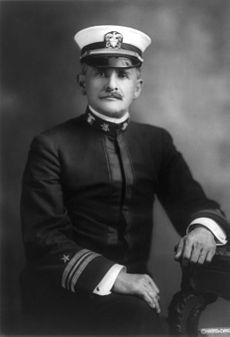
Famous Scientist Albert Abraham Michelson

Early Life & Studies:

Michelson was born in Strzelno, Province of Posen in the Prussian Partition sometimes it's called as Prussian Poland,the former territories of the Polish–Lithuanian Commonwealth (now and before - Poland) into a Jewish family. He moved to the US with his parents in 1855, at the age of two. He grew up in the mining towns of Murphy's Camp, California and Virginia City, Nevada, where his father was a merchant. His family was Jewish by birth but non-religious, and Michelson himself was a lifelong agnostic. He spent his high school years in San Francisco in the home of his aunt, Henriette Levy (née Michelson), who was the mother of author Harriet Lane Levy.

President Ulysses S. Grant awarded Michelson a special appointment to the U.S. Naval Academy in 1869.  During his four years as a midshipman at the Academy, Michelson excelled in optics, heat, climatology and drawing. After graduating in 1873 and two years at sea, he returned to the Naval Academy in 1875 to become an instructor in physics and chemistry until 1879. In 1879, he was posted to the Nautical Almanac Office, Washington (part of the United States Naval Observatory, to work with Simon Newcomb. He obtained leave to continue his studies in Europe. He visited the Universities of Berlinand Heidelberg, and the Collège de France and École Polytechnique in Paris.
In 1877, he married Margaret Hemingway, daughter of a wealthy New York stockbroker and lawyer. They had two sons and a daughter.
Michelson was fascinated with the sciences, and the problem of measuring the speed of light in particular. While at Annapolis, he conducted his first experiments of the speed of light, as part of a class demonstration in 1877. His Annapolis experiment was refined, and in 1879, he measured the speed of light in air to be 299,864±51 kilometres per second, and estimated the speed of light in vacuum as 299,940 km/s, or 186,380 mi/s. After two years of studies in Europe, he resigned from the Navy in 1881. In 1883 he accepted a position as professor of physics at the Case School of Applied Science in Cleveland, Ohio and concentrated on developing an improved interferometer. In 1887 he and Edward Morley carried out the famous Michelson–Morley experiment which seemed to rule out the existence of the aether. He later moved on to use astronomical interferometers in the measurement of stellar diameters and in measuring the separations of binary stars.
In 1889 Michelson became a professor at Clark University at Worcester, Massachusetts and in 1892 was appointed professor and the first head of the department of physics at the newly organized University of Chicago.In 1899, he married Edna Stanton. They raised one son and three daughters.
Awards:
1888 - Rumford Prize
1903 - Matteucci Medal
1907 - Copley Medal
1907 - Nobel Prize in Physics
1912 - Elliott Cresson Medal
1916 - Henry Draper Medal from the National Academy of Sciences 
1923 - Gold Medal of the Royal Astronomical Society
1923 - Franklin Medal
Michelson was a member of the Royal Society, the National Academy of Sciences, the American Physical Society and the American Association for the Advancement of Science.
In 1907, Michelson had the honor of being the first American to receive a Nobel Prize in Physics "for his optical precision instruments and the spectroscopic and metrological investigations carried out with their aid". He also won the Copley Medal in 1907, the Henry Draper Medal in 1916 and the Gold Medal of the Royal Astronomical Society in 1923. Acrater on the Moon is named after him.
Michelson died in Pasadena, California at the age of 78. The University of Chicago Residence Halls remembered Michelson and his achievements by dedicating 'Michelson House' in his honor. Case Western Reserve has dedicated a Michelson House to him, and Michelson Hall (an academic building of science classrooms, laboratories and offices) at the United States Naval Academy also bears his name. Clark University named a theatre after him. Michelson Laboratory at Naval Air Weapons Station China Lake in Ridgecrest, California is named for him. There is a display in the publicly accessible area of the Lab which includes facsimiles of Michelson's Nobel Prize medal, the prize document, and examples of his diffraction gratings.

Saturday, February 14, 2015

Famous Scientist Alan Turing

Alan Mathison Turing, OBE, FRS (23 June 1912 – 7 June 1954) was a British pioneering computer scientist, mathematician, logician, cryptanalyst, philosopher, mathematical biologist, and marathon and ultra distance runner. He was highly influential in the development of computer science, providing a formalisation of the concepts of "algorithm" and "computation" with the Turing machine, which can be considered a model of a general purpose computer. Turing is widely considered to be the father of theoretical computer science and artificial intelligence.

During the Second World War, Turing worked for the Government Code and Cypher School (GC&CS) at Bletchley Park, Britain's codebreaking centre. For a time he led Hut 8, the section responsible for German naval cryptanalysis. He devised a number of techniques for breaking German ciphers, including improvements to the pre-war Polish bombe method, an electromechanical machine that could find settings for the Enigma machine. Turing's pivotal role in cracking intercepted coded messages enabled the Allies to defeat the Nazis in many crucial engagements, including the Battle of the Atlantic; it has been estimated that the work at Bletchley Park shortened the war in Europe by as many as two to four years.

Early life and family:

Turing was born in Paddington, London, while his father, Julius Mathison Turing (1873–1947), was on leave from his position with the Indian Civil Service (ICS) at Chhatrapur, Bihar and Orissa Province, in British India. Turing's father was the son of a clergyman, Rev. John Robert Turing, from a Scottish family of merchants which had been based in the Netherlands and included a baronet. Turing's mother, Julius' wife, was Ethel Sara (née Stoney; 1881–1976), daughter of Edward Waller Stoney, chief engineer of the Madras Railways. The Stoneys were a Protestant Anglo-Irish gentry family from both County Tipperary and County Longford, while Ethel herself had spent much of her childhood in County Clare. Julius' work with the ICS brought the family to British India, where his grandfather had been a general in the Bengal Army. However, both Julius and Ethel wanted their children to be brought up in England, so they moved to Maida Vale,[16] London, where Turing was born on 23 June 1912, as recorded by a blue plaque on the outside of the house of his birth, later the Colonnade Hotel. He had an elder brother, John (the father of Sir John Dermot Turing, 12th Baronet of the Turing baronets).

His father's civil service commission was still active; and, during Turing's childhood years, Turing's parents travelled between Hastings in England and India, leaving their two sons to stay with a retired Army couple. At Hastings, Turing stayed at Baston Lodge, Upper Maze Hill, St Leonards-on-Sea, now marked with a blue plaque.Very early in life, Turing showed signs of the genius that he was later to display prominently. His parents purchased a house in Guildford in 1927, and Turing lived there during school holidays. The location is also marked with a blue plaque.

Education:

Turing's parents enrolled him at St Michael's, a day school at 20 Charles Road, St Leonards-on-Sea, at the age of six. The headmistress recognised his talent early on, as did many of his subsequent educators. In 1926, at the age of 13, he went on to Sherborne School, a well known independent school in the market town of Sherborne in Dorset. The first day of term coincided with the 1926 General Strike in Britain, but he was so determined to attend that he rode his bicycle unaccompanied more than 60 miles (97 km) from Southampton to Sherborne, stopping overnight at an inn.

Turing's natural inclination toward mathematics and science did not earn him respect from some of the teachers at Sherborne, whose definition of education placed more emphasis on the classics. His headmaster wrote to his parents: "I hope he will not fall between two stools. If he is to stay at public school, he must aim at becoming educated. If he is to be solely a Scientific Specialist, he is wasting his time at a public school". Despite this, Turing continued to show remarkable ability in the studies he loved, solving advanced problems in 1927 without having studied even elementary calculus. In 1928, aged 16, Turing encountered Albert Einstein's work; not only did he grasp it, but he extrapolated Einstein's questioning of Newton's laws of motion from a text in which this was never made explicit.

At Sherborne, Turing formed an important friendship with fellow pupil Christopher Morcom, who has been described as Turing's "first love". Their relationship provided inspiration in Turing's future endeavours, but it was cut short by Morcom's death in February 1930 from complications of bovine tuberculosis contracted after drinking infected cow's milk some years previously. This event shattered Turing's religious faith. He became an atheist. He believed that all phenomena, including the workings of the human brain, must be materialistic.

After the war, he worked at the National Physical Laboratory, where he designed the ACE, among the first designs for a stored-program computer. In 1948 Turing joined Max Newman's Computing Laboratory at Manchester University, where he helped develop the Manchester computers and became interested in mathematical biology. He wrote a paper on the chemical basis of morphogenesis, and predicted oscillating chemical reactions such as the Belousov–Zhabotinsky reaction, first observed in the 1960s.

Turing was prosecuted in 1952 for homosexual acts, when such behaviour was still criminalised in the UK. He accepted treatment with oestrogen injections (chemical castration) as an alternative to prison. Turing died in 1954, 16 days before his 42nd birthday, from cyanide poisoning. An inquest determined his death a suicide, but it has since been noted that the known evidence is equally consistent with accidental poisoning. In 2009, following an Internet campaign, British Prime Minister Gordon Brown made an official public apology on behalf of the British government for "the appalling way he was treated". Queen Elizabeth II granted him a posthumous pardon in 2013.

Famous Scienitst Al - Battani

Al-Battani is otherwise called as Albategnius, Albategni or Albatenius in Lain. He was an Arab astronomer, astrologer, and mathematician. He introduced a number of trigonometric relations, and his Kitāb az-Zīj was frequently quoted by many medieval astronomers, including Copernicus.

He was born in Harran near Urfa, in syria Upper Mesopotamia, which is now in Turkey, and his father was a famous maker of scientific instruments. His epithet aṣ-Ṣabi’ suggests that among his ancestry were members of the Sabian sect; however, his full name indicates that he was Muslim. Some western historians state that he is of noble origin, like an Arab prince, but traditional Arabic biographers make no mention of this. He lived and worked in ar-Raqqah, a city in north central Syria.

He was able to correct some of Ptolemy's results and compiled new tables of the Sun and Moon, long accepted as authoritative. Some of his measurements were even more accurate than ones taken by Copernicus many centuries later. Researchers have ascribed this phenomenon to al-Battānī being in a geographical location that is closer to the southern latitude, which might have been more favorable for such observations.

Al-Battānī discovered that the direction of the Sun's apogee, as recorded by Ptolemy, was changing.(In modern heliocentric terms this is due to the changing direction of the eccentricity vector of the Earth's orbit). He also introduced, probably independently of the 5th century Indian astronomer Aryabhata, the use of sines in calculation, and partially that of tangents. He also calculated the values for the precession of the equinoxes (54.5" per year, or 1° in 66 years) and the obliquity of the ecliptic (23° 35'). He used a uniform rate for precession in his tables, choosing not to adopt the theory of trepidation attributed to his colleague Thabit ibn Qurra.

Al-Battānī's work is considered instrumental in the development of science and astronomy. Copernicus quoted him in the book that initiated the Copernican Revolution, the De Revolutionibus Orbium Coelestium. Al-Battānī was frequently quoted by Tycho Brahe, Riccioli, among others. Kepler and Galileo showed interest in some of his observations, and his data continues to be used in geophysics.

The main achievements of al-Battani’s are:

• He cataloged 489 stars.

• He refined the existing values for the length of the year, which he gave as 365 days 5 hours 46 minutes 24 seconds, and of the seasons.

• He calculated 54.5″ per year for the precession of the equinoxes and obtained the value of 23° 35′ for the inclination of the ecliptic.

Al-Battani passed away in 317 H. /929 A.D., near the city of Moussul in Iraq.

Friday, February 13, 2015

Famous Scientist Ahmed Hassan Zewail

Ahmed Hassan Zewail is an Egyptian-American scientist who won the Nobel Prize in Chemistry in 1999 – the first of his race to win such accolade in the field of Science. He is known to be the Father of femtochemistry because of his marvelous works in the area of Physical Chemistry. Zewail is a Physics professor, the Linus Pauling Chair Professor in Chemistry and the Physical Biology Centre director for the UST or the Ultrafast Science and Technology at the prestigious school of California Institute of Technology. Ahmed Zewail is a true living legacy of Science, technology, and innovation that he made his tools into helping Egypt progress as a society in any generation.

Ahmed Hassan Zewail, was born on February 26, 1946 in Da
manhour, Egypt and was raised in Desouk.  His father Hassan assembled bicycles and motorcycles and later became a government official. His parents stayed married for 50 years, till the death of his father in October 22, 1992.

He received a bachelor's and an MS degree in Chemistry from the Alexandria University before moving to the United States to complete his PhD at the University of Pennsylvania with advisor Robin M. Hochstrasser. He later completed a post-doctoral fellowship at the University of California, Berkeley with advisor Charles B. Harris.

After completing his post doctoral work at UC-Berkeley, he was awarded a faculty appointment at the California Institute of Technology in 1976, where he has remained since 1990, he was made the first Linus Pauling Chair in Chemical Physics. He became a naturalized citizen of the United States in 1982.

Zewail has been nominated and will participate in President Barack Obama's Presidential Council of Advisors on Science and Technology (PCAST), an advisory group of the nation's leading scientists and engineers to advise the President and Vice President and formulate policy in the areas of science, technology, and innovation.

Research:

Zewail's key work has been as a pioneer of femtochemistry—i.e. the study of chemical reactions across femtoseconds. Using a rapid ultrafast laser technique (consisting of ultrashort laser flashes), the technique allows the description of reactions on very short time scales - short enough to analyse transition states in selected chemical reactions.

His work started with the question, how fast did the energy within an isolated large molecule like naphthalene redistribute among all the atomic motions? They had to build an apparatus with a vacuum chamber for molecules coming out of the source as a collimated beam at supersonic speed. The challenge was to build an ultrafast laser to be used with the molecular beam. The beam and the picosecond laser system were interfaced. The goal of the project began as wanting to directly measure the rate of vibrational-energy redistribution for an isolated molecule using the picosecond laser.

They wanted to see the process from birth to death of a molecule. In this experiment the isolated anthracene molecule was unexpected and contrary to popular wisdom. During redistribution the population was oscillating coherently back and forth. There was no decay, but there was rebirth and all molecules moved coherently in a phase. In a large molecule, each vibrational motion is like a pendulum, but there are many motions because a molecules has many atoms. If the motions were not coherent, the observation would have been much different.

The results of this experiment revealed the significance of coherence and its existence in complex molecular systems. The finding of coherence were significant because it showed that through the expected chaotic motions in molecules, ordered motion can be found, despite the presence of a "heat sink", which can destroy coherence and drain energy. Coherence in molecules had not been observed before not because of a lack of coherence, but because of a lack of proper probes. In the anthracene experiments, time and energy resolutions were introduced and correlated.

Though Zewail continued studies on vibrational-energy redistributions, he started new studies on shorter time resolutions for molecules showing different chemical processes and rotational motions.

Awards and Honours:

In 1999, Zewail became the third Egyptian national to receive the Nobel Prize, following Egyptian president Anwar Al-Sadat (1978 in Peace), Naguib Mahfouz (1988 in Literature). Mohamed ElBaradei followed him (2005 in peace). Other international awards include the Wolf Prize in Chemistry (1993) awarded to him by the Wolf Foundation, the Tolman Medal (1997), the Robert A. Welch Award (1997), the Othmer Gold Medal in 2009, the Priestley Medal from the American Chemical Society and Davy Medal from the Royal Society in 2011. In 1999, he received Egypt's highest state honor, the Grand Collar of the Nile.

Zewail was awarded an honorary doctorate by Lund University in Sweden in May 2003 and is a member of the Royal Swedish Academy of Sciences. Cambridge University awarded him an honorary Doctor of Science in 2006. In October 2006, Zewail received the Albert Einstein World Award of Science for his pioneering development of the new field femtoscience and for his seminal contributions to the revolutionary discipline of physical biology, creating new ways for better understanding the functional behavior of biological systems by directly visualizing them in the four dimensions of space and time.In May 2008, Zewail received an honorary doctorate from Complutense University of Madrid. In February, 2009, Zewail was awarded an honorary doctorate in arts and sciences by the University of Jordan.In May 2010, he received a Doctor of Humane Letters from Southwestern University. in October/2011 he was awarded an honorary doctorate in science from the University of Glasgow, UK  His students include scientists like Martin Gruebele

 He also has won the King Faisal award in 1989.

Thursday, February 12, 2015

Famous Scientist Agnes Arber


Agnes Robertson Arber FRS (23 February 1879 – 22 March 1960) was a British plant morphologist and anatomist, historian of botany and philosopher of biology. She was born in London but lived most of her life in Cambridge, including the last 51 years of her life. She was the first woman botanist to be elected as a Fellow of the Royal Society (21 March 1946, at the age of 67) and the third woman overall. She was the first woman to receive the Gold Medal of the Linnean Society of London (24 May 1948, at the age of 69) for her contributions to botanical science.

She was the first child of Henry Robertson, an artist and Agnes Lucy Turner and had three younger siblings, Donald Struan Robertson (who later became Regius Professor of Greek in the University of Cambridge) Janet Robertson who later became a portrait painter and Margaret Robertson (married name Hills) who edited Keats. 

Her scientific research focused on the monocotyledon group of flowering plants. She also contributed to development of morphological studies in botany during the early part of the 20th century. Her later work concentrated on the topic of philosophy in botany, particularly on the nature of biological research.

Learning Period : 

At the age of eight Arber began attending the North London Collegiate School founded and run by Frances Buss, one of the leading proponents for girls' education. Under the direction of the school's science teacher Miss Edith Aitken Arber discovered a fascination with botany, publishing her first piece of research in 1894 in the school's magazine and later coming first in the school's botany examinations, winning a scholarship. It was here that Arber first met Ethel Sargent, a plant morphologist who gave regular presentations to the school science club. Sargent would later become her mentor and colleague, having a profound influence on Arber's research interests and methods.

In 1897 Arber began studying at University College, London, gaining her B.Sc. in 1899. After gaining an entrance scholarship Arber became a member of Newnham College, Cambridge and took a further degree in Natural Sciences. She gained first class results in every examination at both universities, along with several prizes and medals from University College, London.  After finishing her Cambridge degree in 1902 Arber worked in the private laboratory of Ethel Sargent for a year, before returning to University College, London as holder of the Quain Studentship in Biology. She was awarded a Doctorate of Science in 1905.

Family:

Agnes Arber married paleobotanist Edward Alexander Newall Arber (1870–1918), in 1909 and moved back to Cambridge, where she would remain for the rest of her life. Her only child Muriel Agnes Arber was born in 1913. Arber and her husband had many interests in common, and her marriage was described as 'happy'.[1] Arber was awarded a Research Fellowship from Newnham College in 1912 and published her first book Herbals, their origin and evolution in the same year. Her husband Newall Arber died in 1918 following a period of ill health. Arber never re-married, but continued with her research. She studied in the Balfour Laboratory for Women from her marriage until the laboratory's closure in 1927. Arber maintained a small laboratory in a back room of her house from then until she stopped performing bench research in the 1940s and turned to philosophical study.


Early career:

Before attending University College, London Arber spent the summer of 1897 working with Ethel Sargent in her private laboratory in Reigate, where Sargent instructed her on microtechniques used to prepare plant specimens for microscopic examination.  Arber returned to work in Sargent's laboratory at least once during the summer holidays while she was studying at University College London. Sargent employed Arber between 1902–1903 as a research assistant working on seedling structures, during which time in 1903 she published her first paper 'Notes on the anatomy of Macrozamia heteromera' in Proceedings of the Cambridge Philosophical Society. Whilst at University College London Arber conducted research on the gymnosperm group of plants, producing several papers on their morphology and anatomy. The study and philosophy of plant morphology would become the central focus of her later work.

Balfour Laboratory: 

In 1909 Arber was granted space in the Balfour Laboratory for Women by Newnham College. This building had been purchased and founded by the two women's colleges of the University in 1884 for the use of their students and researchers (women at this time were not permitted to attend laboratory demonstrations and practical classes). Arber worked in the laboratory until its closure in 1927.

Following the award of a Research Fellowship by Newnham College between 1912–1913 Arber published her first book in 1912. Herbals, their origin and evolution describes the transformation of printed Herbals between 1470–1670. Arber links the emergence and development of botany as a discipline within natural history with the evolution of plant descriptions, classifications and identifications seen in Herbals during this period. Arber was able to consult the large collection of printed Herbals in the library of the Botany School at Cambridge as part of her research for this work. It was largely re-written and expanded for a second edition published in 1938, was published as a third edition in 1986 and is still considered the standard work for the history of Herbals.

Arber focused her research on the anatomy and morphology of the monocot group of plants, which she had originally been introduced to by Ethel Sargent. By 1920 she had authored two books and 94 other publications. Her second book Water Plants: A Study of Aquatic Angiosperms was published in 1920. In this book Arber presents a comparative study of aquatic plants by analysing differences in their morphology. Arber also provides interpretations of the general principles she used to create her analysis. Her study was the first to provide a general description and interpretation of aquatic plants.

In 1925 Arber published her third book The Monocotyledons. The Editors of the Cambridge Botanical Handbooks series had asked Ethel Sargent in 1910 to prepare a volume on the monocots for this series. However ill-health and advancing years made it almost impossible for Sargent to complete the book, and in 1918 she suggested Arber to complete the work. The Monocotyledons continues Arber's morphological methods of analysis she presented in Water Plants. She provides a detailed study of the monocot plants from comparing their internal and external anatomy. However her discussion of the general principles she uses in her analysis are more explicit in this volume, as she discusses the methods and philosophy of morphological study. Although comparative anatomical analysis as demonstrated in The Monocotyledons and Water Plants: A Study of Aquatic Angiosperms was central to botanical investigation in the early 20th century, there were distinct differences between British and European researchers concerning the aims of morphological study. Arber addressed this by creating a distinction between "pure" and "applied" morphology, with her work focusing on comparative anatomy to investigate questions concerning significant topics such as constructing phylogenies, instead of using traditional views of plant structure.This view was further developed in her later work.

Later work:

After the closure of the Balfour Laboratory Arber set up a small laboratory in a back room of her house to conduct her research, after the resident head of the Botany School Professor Albert Charles Seward claimed there was no space in the School for Arber to continue her research using its facilities. Arber had been introduced to the idea of private research from her time spent with Ethel Sargent in 1902–1903, and from later comments to members of Girton College Natural Sciences club and in letters to friends she stated she liked working at home due to challenges posed by independent research, despite not originally making the choice herself.

After the publication of The Monocotyledons Arber continued her research into this group, concentrating her research into the Gramineae family of plants, especially cereals, grasses and bamboo. This led to the publication of her final book concerning plant morphology, The Gramineae in 1934. In this book Arber described the life cycles, embryology and reproductive and vegetative cycles of cereals, grasses and bamboo using comparative anatomical analysis of these plants. Recognising the importance of these plants to the development of human societies, Arber begins this study with the history of these plants in relation to humans, with "the more strictly botanical aspect is treated as developing out of the humanistic". The book was preceded by 10 papers in The Annals of Botany detailing the results of her research.

Between 1930–1942 Arber conducted research into the structure of flowers, where she investigated the structure of many different forms and used to morphological information to interpret other flower structures. Her results were published in 10 review papers spanning this period.In 1937 she published a summary of the morphological ideas which had been discussed concerning floral structure, which was considered an important review article for morphological studies.

In January 1942 Arber published her last paper involving original botanical research. All of her subsequent publications were entirely concerned with historical and philosophical topics.

Agnes Arber died on 22 March 1960 at the age of 81.